Using a website template can be an efficient way to establish or refresh the online presence of an accounting firm without commissioning a completely bespoke website. The more important decision is choosing the right type of template and understanding what you are actually getting for your investment.
There are hundreds of free website themes available online, ranging from inexpensive general-purpose designs through to websites developed specifically for professional services businesses.
If you are comparing an accountant website template, the price is only one consideration. Design quality, customisation, content, security, ongoing support and the ability to attract prospective clients can have a much greater impact on the value of the finished website.
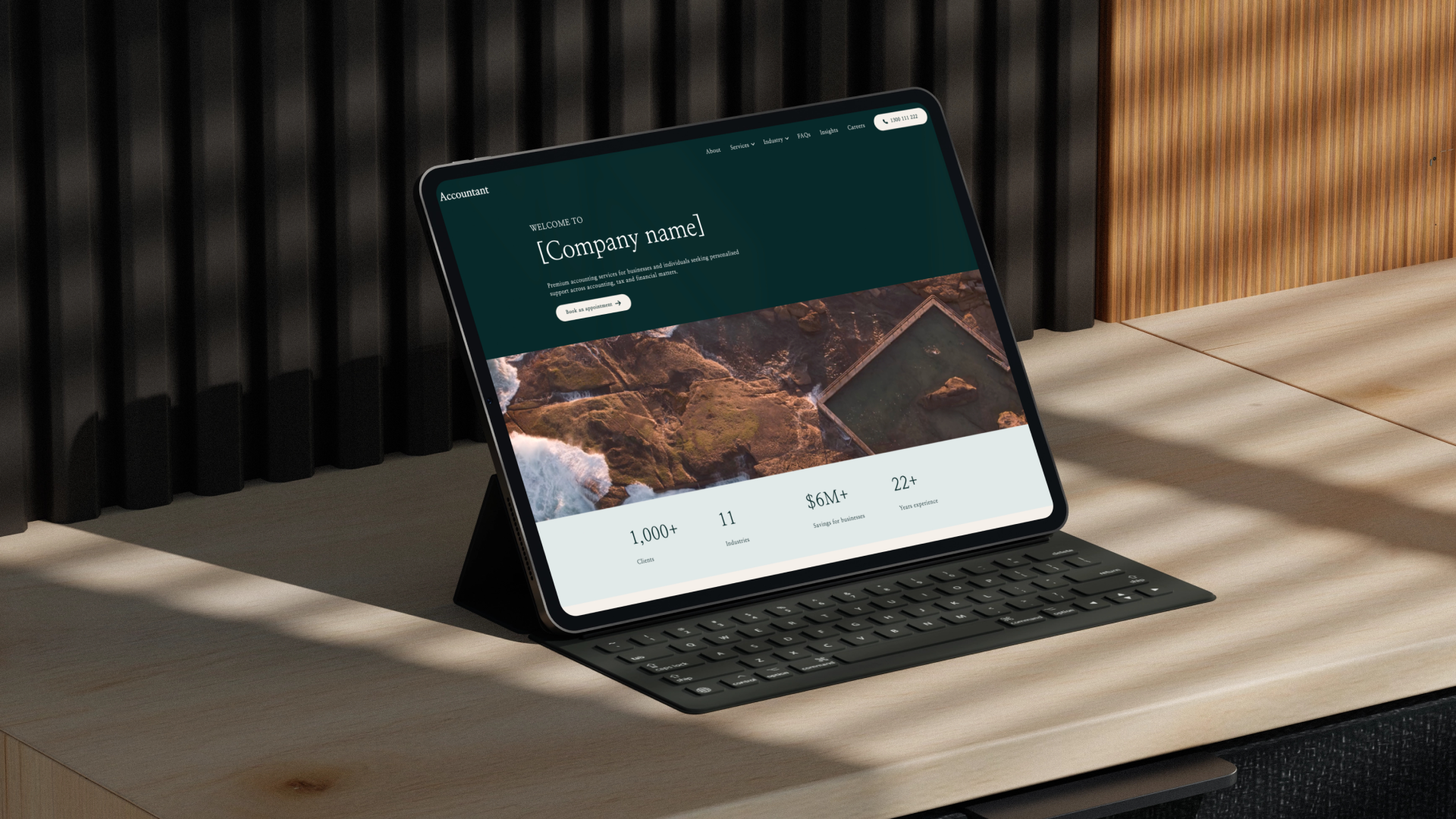
Sample of our website template made by Accountant Website
What is an accounting firm website template?
An accounting firm website template provides an established design and page structure that can be adapted to represent an individual accounting practice. Instead of beginning every page from a blank canvas, the underlying layout, navigation and key website components have already been developed.
This can substantially reduce the amount of design and development required while still allowing the finished website to be customised around the firm’s brand, services and content.
The quality of templates varies considerably, however. A generic business theme downloaded from a template marketplace is very different from an accounting firm website template developed around the requirements of Australian accountants.
The value lies not simply in having a pre-designed layout, but in starting with a website structure that is already appropriate for the type of business using it.
What do free accountant website templates provide?
Free templates can be attractive to new firms or sole practitioners looking to minimise their initial costs. Many website platforms have free themes available, making it possible to establish a basic online presence without purchasing a premium design.
For a simple website with limited requirements, this may be sufficient. The limitations generally become more apparent when the template needs to be adapted into a professional website representing an established accounting business.
A free theme will usually have been designed for a broad audience. As a result, considerable work is still required to turn the template into something appropriate for an accounting firm.
You may need to determine the page structure, source imagery, write all of the content, configure enquiry forms, establish calls to action and adapt generic design components to suit your services.
Free does not necessarily mean there is no cost. It often means that more of the implementation, customisation and ongoing management needs to be handled by the business itself.
What do you get with a paid accountant website template?
A paid accountant website template should provide more than a different visual design. The benefit should come from reducing the amount of work required to turn the template into an effective website for an accounting practice.
A template developed specifically for accountants can begin with an understanding of how accounting firms typically present their services, establish credibility and encourage prospective clients to make contact.
This may include appropriate structures for:
- Accounting and tax services
- Business advisory services
- Bookkeeping
- SMSF services
- Virtual CFO services
- Team profiles
- Industry specialisations
- Articles and insights
- Enquiry and contact pathways
Rather than spending time adapting a general business theme to resemble an accounting website, the firm starts from a framework created for its industry.
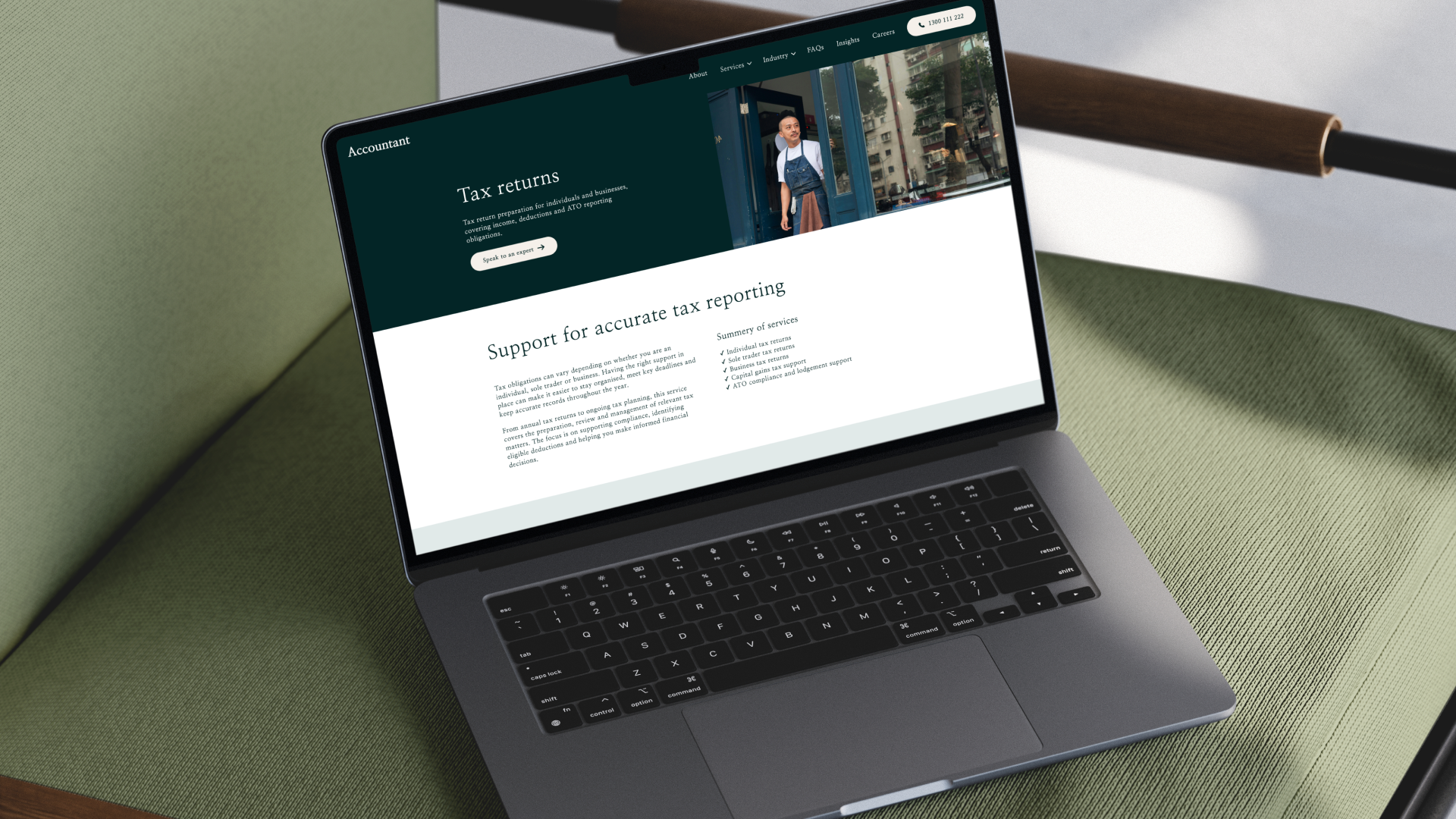
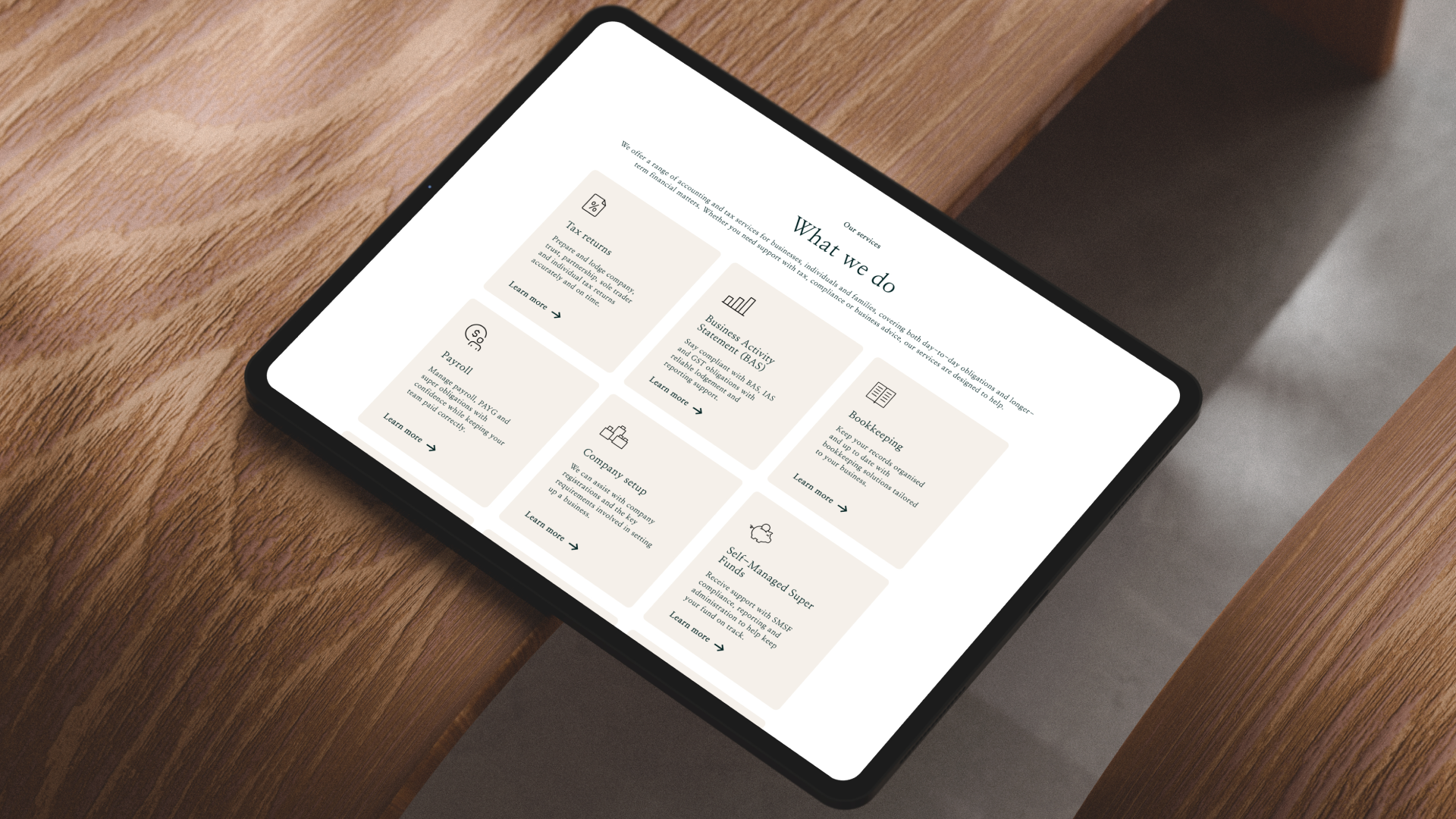
Example: Service pages optimised to the services accounting firms provide
Consider how much customisation is included
One of the biggest differences between accountant website templates is how much flexibility they provide once you choose a design.
A template should be a starting point rather than a requirement for every accounting firm using it to look identical.
Your logo, brand colours, typography, imagery and content should be able to be incorporated so the finished website represents your individual practice. The website also needs to accommodate differences in service offerings, team size, locations and target markets.
This is particularly relevant for established firms. A practice specialising in business advisory and virtual CFO services should not communicate in exactly the same way as a suburban tax practice focused predominantly on individuals.
When comparing templates, look beyond the demonstration website and determine how extensively the design can be adapted to your business.
Your content matters as much as the template
A good design can establish a professional presentation, but the content ultimately explains why a prospective client should consider your firm.
Generic template copy such as “we provide accounting solutions for businesses of all sizes” does little to distinguish one accountant from another. Your website should clearly communicate who you work with, what services you provide, where you operate and the experience or expertise your firm brings to those areas.
This is also important for organic visibility. Search engines and AI platforms need substantive content to understand what your accounting firm does.
An accounting website template should therefore give you an appropriate framework for content rather than limiting you to a small number of generic sections.
SEO should be considered before choosing a template
A visually impressive template has limited value if its technical structure makes it difficult for prospective clients to discover your firm online.
SEO for accountants needs to be considered in the underlying website architecture. Pages should load efficiently, work properly across mobile devices and provide a logical structure that search engines can crawl and index.
The website should also support individual pages for important services and topics rather than placing everything onto a single page. This gives an accounting firm greater scope to build content around the searches relevant to its business.
For example, a firm may eventually want dedicated content for tax accounting, bookkeeping, SMSFs, business advisory or particular industries it works with. Choosing a template that supports this type of expansion gives the website a stronger foundation for organic growth.
Consider visibility beyond traditional Google search
The way prospective clients discover professional services is also changing. Google remains important, but people are increasingly using AI platforms such as ChatGPT to research businesses, compare services and ask questions about accounting and finance.
This makes the structure and quality of website content increasingly important.
There is no template that can guarantee rankings in Google or citations within ChatGPT. A good website can, however, establish the technical foundation required for content to be accessed and understood.
Clear headings, crawlable text, descriptive service pages, sensible internal linking and authoritative articles all help create a website that communicates the firm’s expertise clearly to both people and machines.
When comparing accountant website templates, consider whether the website gives you room to develop this content over time rather than simply providing an attractive digital brochure.
Look beyond the design to security and maintenance
Security and ongoing management are just as important as the visual design of an accounting website. As we cover in our article on website development for accounting firms, the underlying infrastructure, application security and ongoing maintenance all contribute to the long-term reliability of the website.
With a free template, responsibility for installation, software updates, hosting, backups, security and troubleshooting may sit entirely with the accounting firm. The theme may also depend on third-party plugins or components that need to be maintained separately.
A professionally managed template can combine the design with managed infrastructure, security updates, backups and ongoing technical support. This reduces the amount of technical responsibility carried by the firm and helps keep the website stable over time.
The important question is therefore not only how the website looks at launch, but how it will be supported, maintained and protected throughout its life.
Check who supports the website after launch
Before choosing a template provider, establish what happens once the website is live.
Consider whether there is someone you can contact if the website experiences a technical issue, whether software updates are managed and whether backups and security are part of the service.
Support is also valuable when the business itself changes. Accounting firms add staff, introduce services, update branding and change content. Having an established team familiar with the website can make those changes considerably easier to implement.
Think about who will manage the website
An accounting firm should not need to contact a developer every time it wants to change a paragraph or publish an article.
A suitable content management system can allow authorised staff to maintain the areas of the website they need without giving them responsibility for the underlying infrastructure.
This might include updating team profiles, editing service information, publishing articles or maintaining other everyday content.
When reviewing an accounting website template, ask to see how the content management system works rather than focusing exclusively on the front-end design. A website that looks good but is difficult to maintain can create unnecessary administration for years after launch.

Free vs paid accounting website templates: which is right for your firm?
There is nothing inherently wrong with using a free template. For a new business requiring a very simple online presence, it can provide an inexpensive way to get started.
The trade-off is usually the amount of work and responsibility that remains with the accounting firm.
A paid template becomes more compelling when the objective is to establish a professional website without having to manage every aspect of its design, development and technical operation internally.
Rather than comparing the options solely on upfront price, consider:
- How much customisation is included?
- Was the template designed with accounting firms in mind?
- Can you easily manage your own content?
- Does the structure support SEO and future content development?
- Is the website designed to perform well across desktop and mobile devices?
- Who manages hosting, updates and security?
- What technical support is available after launch?
Choose an accountant website template that can grow with your firm
The right template should give your accounting firm an effective starting point without unnecessarily restricting what the website can become.
Design is important, but it is only one part of the decision. Content flexibility, technical performance, SEO, security, support and the ability to manage the website over time all contribute to its long-term value.
For firms that want a professional online presence without the cost and complexity of starting entirely from scratch, a purpose-built accountant website template can provide a practical middle ground. It combines an established website framework with the ability to tailor the finished result around your accounting firm.
The objective should be a website that looks like your business, communicates your expertise clearly and gives you the foundation to build your online visibility over time.